Go-to-market (GTM) strategy

A go-to-market (GTM) strategy details how an organization will engage with customers to convince them to buy their product or service and to gain a competitive advantage. A go-to-market strategy includes in its scope customer segmentation and targeting; positioning; product pricing; brand, demand generation, earned media, and demand capture marketing; sales channels and routes-to-market; and customer engagement, retention, and upsell―essentially the entire scope of marketing and sales.

Relevant content

Futuristic B2B digital interface with data analytics and business communication icons concept on dark background in glowing blue style. 3D Rendering

The problem with B2B measurement

A breakdown of the true nature of the B2B pipeline, how buyers really move through decisions, why marketing and sales stages often misrepresent reality, and the gap between internal processes and customer expectations.
2025 forecast with AI technology concept on futuristic interface displayed on tablet.

Report card: Grading 2025 GTM predictions

A year-end look at how 2025's Go-to-Market predictions held up, from economic expectations and AI-driven transformation to the growing gap between rapid tech innovation and enterprise readiness.

Drive scalable growth with science & economics

Go-to-market teams face rising pressure for ROI and alignment. Learn how applying science and economics builds scalable, predictable growth, improves decision-making, drives efficiency, and creates durable strategies for long-term organizational success.

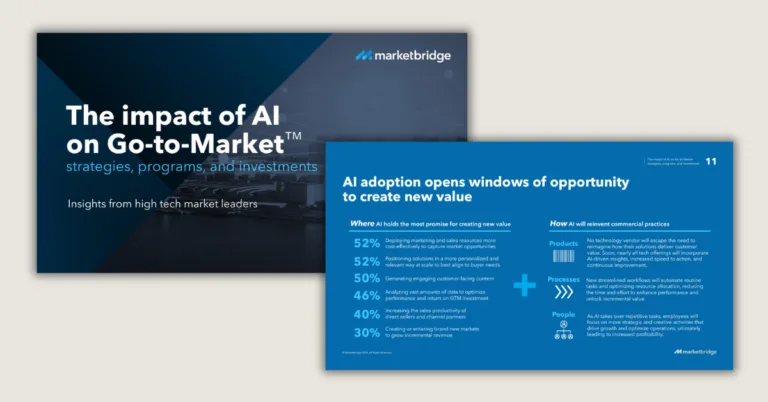
The impact of AI on go-to-market strategies, programs, and investments

Whether you’re navigating the impact of AI on customer personalization, content development, or strategic agility, this report provides the insights needed to stay ahead of the curve.
Skip to content